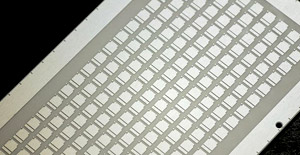
DPC (Direct Plated Copper) Metallized Ceramic Substrate
Smaller, Thinner Thin Film, Thick Film Design.
Better Heat Dissipation; Longer Lifetime DPC Substrate
Why DPC Metallized Substrate?
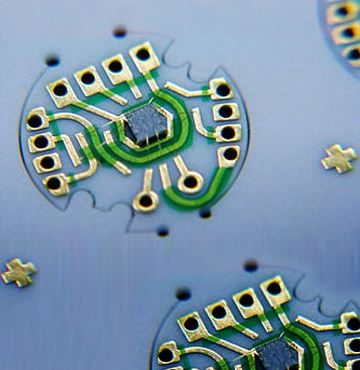
DPC is created for better electrical performance and flexibility because of fine line capability and solid copper via fill. DPC is also a cost-effective alternative for the reasons of more flexible manufacturing capability, especially for thinner metallization.
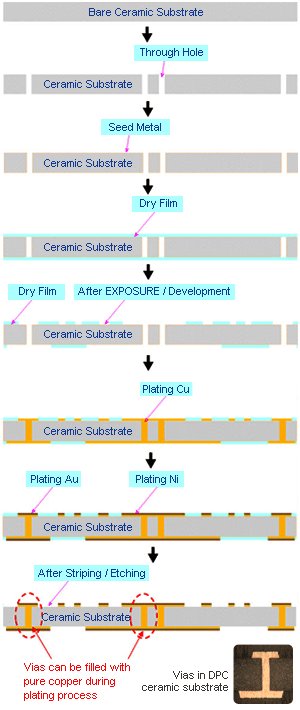
How To Make DPC Substrate?
Comparison Of DPC To Other Technologies
|
Key Attributes |
DPC |
Thin Film |
Thick Film |
|
Conductor Electrical Conductivity |
Very good. Thick copper conductor. |
Poor conductivity due to very thin film thickness. |
Good conductivity. Lowered by the presence of the glass phase. |
|
Via Electrical Conductivity |
Very good. Vias filled with pure copper. |
Very good. Vias filled with pure copper. |
Poor. Vias filled with 50% metal and 50% glass or pores. |
|
Feature Resolution |
Goood. Depends on Cu thickness. |
Very good. |
Goood. Determined by screen print capability. |
|
Cost |
Low to moderate. Vias and metal deposited in the same process. |
High cost. Expensive substrate. Lapp and polish required after via deposition. |
Low to moderate. Expensive metal pastes. Low cost substrate and low cost deposition technology. |
|
Thermal Performance |
Very good. AIN or alumina substrate and high thermal conductivity metal. |
Good. AIN or alumina substrate. Metal layer too thin for heat spreading. |
Moderate. Alumina substrate. Conductivity through the metal is poor due to the glass phase. |
|
Suitability for Power Applications |
Very suitable. Copper conductors carry high currents. |
Not suitable. Thin film layers can not carry high currents. |
Suitable. Conductors with a glass phase have moderate conductivity. |
|
Suitability for High Frequency Applications |
Suitable. Good conductivity and line resolution |
Very suitable. Excellent line resolution. |
Not suitable. |
|
Green |
Yes |
Yes |
No. Often contain Pb additives. |
Summary
Overall, copper plating performs superior compared to other technologies in terms of its features and applications.
DPC Substrate Features:
Higher circuit density
Outstanding high-frequency characteristics
Excellent thermal management and heat-transfer performance
Outstanding solderability and wire-bonding assembly characteristics
Low tooling costs and quick turnaround of prototypes
Applications of DPC:
HBLED
Substrates for solar concentrator cells
Power semiconductor packaging including automotive motor control
Hybrid and electric automobile power management electronics
Packages for RF
Microwave devices