technical ceramic solutions

News

Category Archives: News

Why Ceramic Substrates Fail: Cracking, Warpage and Metallization Problems Explained

Ceramic substrates are widely used in power electronics, LED packaging, and semiconductor applications due to their excellent electrical insulation, high thermal conductivity, and chemical stability. However, during the actual manufacturing and service process, ceramic substrates may still encounter various reliability failure issues, among which the more typical ones include: cracking, warping, and metallization structure failure.

In most cases, these failures are not caused by a single factor, but by the combined effects of material properties, structural design, and manufacturing processes.


I. Cracking of Ceramic Substrate: A typical brittle fracture failure


1. Typical Failure Modes

The cracking of ceramic substrates typically manifests as:

Cracks occur during processing or assembly

Breakage occurs during reflow soldering or brazing

Cracks propagate during thermal cycling tests and lead to failure


2. Root Causes


(1) Thermal stress mismatch

There is a significant difference in thermal expansion coefficients between ceramic materials (such as Al2O3, AlN) and metals (such as Cu, Au). During the temperature cycling process, interface thermal stress is generated, which is an important driving force for crack initiation and propagation.


(2) Surface/subsurface defects introduced during processing

During the processes of cutting, slicing, grinding or drilling, microcracks or residual damage layers may be introduced. These defects may expand into through-cracks under the subsequent thermal mechanical loading.


(3) Structural stress concentration

Sharp corner structures, insufficient clearance around holes, or local section changes can all lead to local stress concentration, thereby reducing the reliability of the structure.


3. Recommended Solutions

Optimize the structural design to avoid sharp corners and high-stress concentration areas

Improve the processing quality to reduce micro-cracks and processing damage layers

Prioritize the use of material systems with higher fracture toughness in high-reliability applications (such as using AlN to replace part of Al2O3 in certain applications)


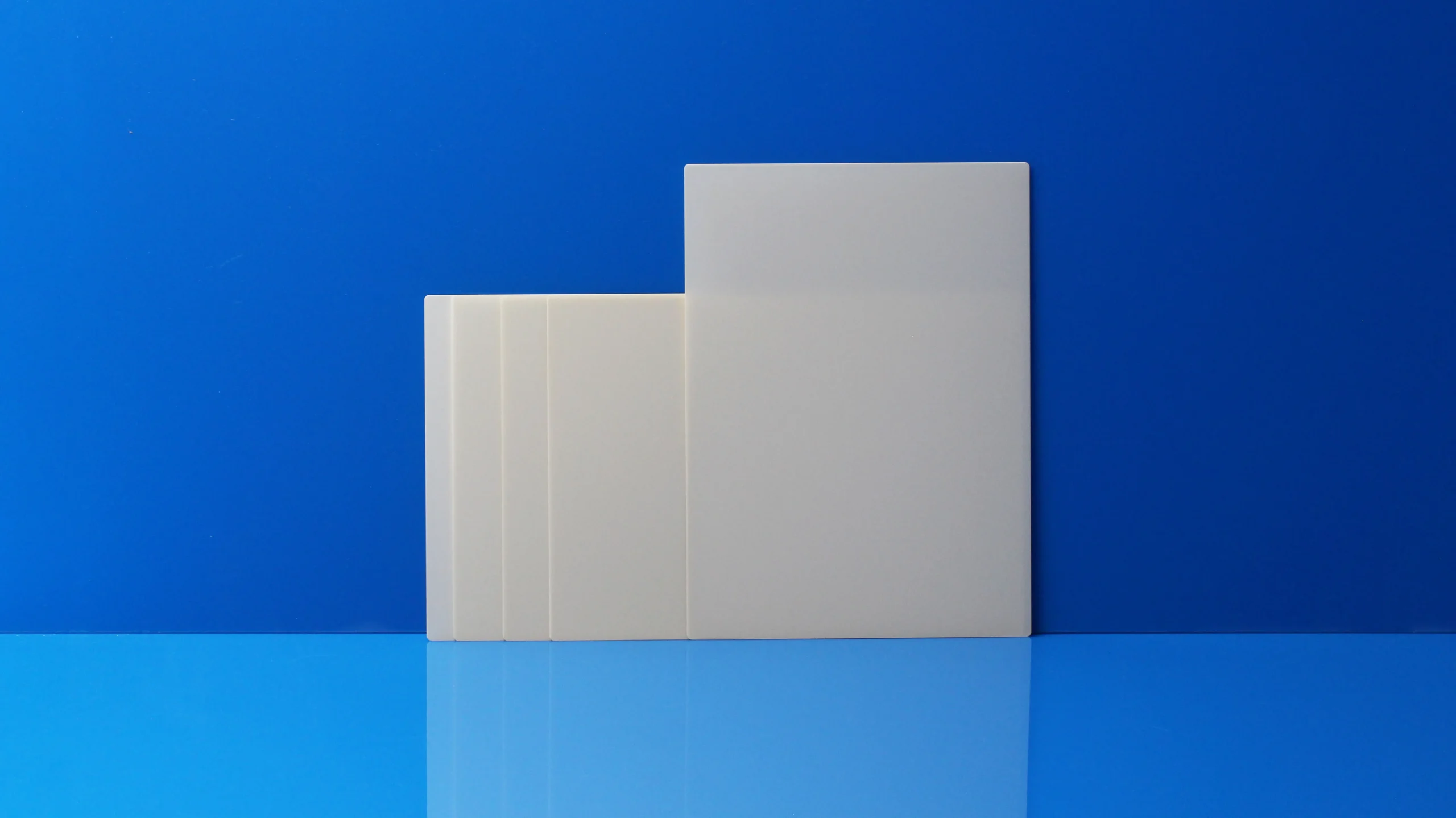
Aluminum Nitride Substrate


II. Ceramic substrate warping: Overall deformation caused by thermal-mechanical mismatch


1. Typical Failure Modes

Warpage typically appears as overall bending or distortion of the substrate after sintering or subsequent processing.

The flatness is insufficient during SMT assembly.

Structural deformation after reflow soldering leads to uneven welding stress.


2. Main Mechanism


(1) Thermal stress imbalance caused by asymmetric structure

In DBC/AMB or metallized ceramic structures, single-sided or asymmetric metal layers can lead to uneven thermal expansion constraints, thereby causing warping.


(2) Temperature gradient during sintering process and difference in shrinkage

During the sintering process, if there is an uneven temperature field or if the temperature rise and drop rate control is improper, it may lead to differences in the densification behavior in different areas, thereby generating residual stress.


(3) Differences in material density and tissue uniformity

Uneven density distribution of the preform or differences in local porosity can lead to inconsistent sintering shrinkage, thereby causing macroscopic deformation.


(4) The thickness and distribution of the metal layer have an impact (particularly significant for DBC/AMB)

In the DBC structure, the thickness and distribution of the copper layer have a significant impact on the warpage behavior, and are often one of the dominant factors.


3. Recommended Solutions

Optimize the structural design and adopt symmetrical metallization structures as much as possible.

Control the sintering curve, reduce the temperature gradient and the accumulation of thermal stress.

Improve the uniformity of the ceramic body density.

In the DBC/AMB design, reasonably match the copper thickness and the distribution of the patterns.


Metallized Ceramic Substrate


III. Metallization Failure: The result of the combined effect of interface and fatigue.


1. Typical Failure Modess

Local peeling or overall delamination of the metal layer

Failure of the pad or interruption of the conductive path

Decrease in electrical connection reliability after thermal cycling


2. Main mechanism


(1) Interfacial bonding degradation

In the DBC (Direct Bonded Copper) or AMB (Active Metal Brazing) systems, the bonding between ceramics and metals relies on the interface reaction layer or transition layer structure. If the interface reaction is insufficient or fails, it will result in a decrease in bonding strength.


(2) Thermal cycle fatigue accumulation

Due to the difference in thermal expansion coefficients between ceramics and metals, under the long-term action of thermal cycling loads, the interface shear stress accumulates continuously, eventually leading to fatigue damage and delamination.


(3) Process-related defects

Including but not limited to:

Poor control of copper layer oxidation (key factor in DBC process)

Insufficient wetting of active metals (key factor in AMB process)

Pores (voids) or unbound areas

Uneven local interface reactions


3. Recommended Solutions


Optimize the process parameters of DBC/AMB to enhance the uniformity of interface reactions

Strictly control the oxygen content and the atmosphere environment (especially during the copper oxidation process of DBC)

Improve the wetting and diffusion quality of the active layer in AMB

Carry out systematic thermal cycling reliability verification (Thermal Cycling Test)


IV. Systematic Influencing Factors Affecting the Reliability of Ceramic Substrates


In practical engineering applications, the reliability of ceramic substrates is usually determined by the following three levels together:


1. Material level

Aluminum oxide (Al₂O₃): Mature and stable, with lower cost

Aluminum nitride (AlN): High thermal conductivity, suitable for high power density scenarios

Silicon nitride (Si₃N₄): High strength and high reliability, suitable for demanding working conditions


Silicon Nitride Substrate


2. Structural Design Aspects

Stress Concentration Control (Holes, Boundaries, Corners)

Distribution of Copper Layers and Symmetry Design

Optimization of Thermal-Mechanical Load Paths


3. Manufacturing Process Aspects

Temperature uniformity control during sintering process

Quality control of metallization interface

Control of processing damage and optimization of post-processing techniques


V. Conclusion


The failure of ceramic substrates is not usually caused by a single factor, but rather is the result of the combined effects of material performance limitations, the rationality of the structural design, and the control level of the manufacturing process.

In high-reliability applications (such as IGBT power modules, SiC devices, and high-power LED packaging), it is necessary to comprehensively optimize the material selection, structural design, and process control from a system perspective in order to reduce the failure risk caused by thermal-mechanical coupling stresses.


Innovacera can offer ceramic substrates covering materials such as alumina, aluminum nitride, and silicon nitride, as well as metallization solutions like DBC, AMB, and DPC. It also supports customized design and application selection optimization. For technical support, material selection, or custom designs, feel free to contact us at sales@innovacrea.com or send your drawings for evaluation.


How to Choose The Most Suitable High-Temperature Ceramic Components To Improve Furnace Efficiency & Extend Service Life

From semiconductor chips to new energy vehicles, and from steel metallurgy to environmental protection, high-temperature ceramic components support the development of high-end manufacturing with their unique performance advantages.


In modern industrial systems, furnace systems are the core equipment for material synthesis, heat treatment, energy conversion, and environmental protection. Whether it’s the diffusion process of semiconductor wafers, the sintering of lithium battery cathode materials, the continuous casting of steel, or the regenerative combustion of industrial waste gases, these processes are inseparable from extreme conditions such as high temperature, corrosion, wear, and thermal shock.


Their characteristics—high melting point, high hardness, chemical inertness, thermal shock resistance, and electrical insulation—make them key to overcoming these “metal bottlenecks.”


Ultra High Temperature Ceramics Insulator Tubes for Furnaces


INNOVACERA provides the following ceramic components for various furnace systems.


1. Boron Nitride Ceramics (BN)

Furnace System Type Application Area Key Components Specific Application Method
Vacuum Furnaces, Crystal Growth Furnaces Compound Semiconductors, Vacuum Coating Crucibles, Evaporation Boats, Insulators Crystal growth for wafer materials, or evaporation for OLEDs, metal coatings.
Powder Metallurgy Sintering Furnaces Powder Metallurgy, Cemented Carbides Sintering Boats, Mold Release Coatings Holds metal powders during sintering, preventing adhesion to the boat.
Hot Pressing, Pressureless Sintering, Gas Pressure Sintering Furnaces Electronic Ceramic Substrates, Power Semiconductors Setter Plates, Hot Pressing Molds, Multi-layer Ceramic Clamps Carries ceramic substrates (e.g., AlN, Si₃N₄) during sintering at 1600°C–1900°C without sticking or contamination.
High-Temperature, High-Pressure Equipment Composite Materials Hot Pressing Molds, Seals Densification and forming of carbon/carbon composites and ceramic matrix composites.


2. Alumina Ceramics (Al₂O₃)

Furnace System Type Application Area Key Components Specific Application Method
Tube Furnaces, Box Furnaces Semiconductor/Photovoltaic, Lab Research Furnace Tubes, Chambers Serves as a sample container for high-temperature sintering, diffusion, and annealing in controlled atmospheres.
Pusher Furnaces, Shuttle Kilns Lithium Battery Cathode Materials, Electronic Ceramics Saggars, Pusher Plates Used in continuous production for sintering materials like LFP, NMC, and electronic ceramic components.
Single Crystal Growth Furnaces Semiconductors, Optical Crystals Crucibles, Insulation Layers Provides a stable, pure thermal environment for growing crystals like sapphire and silicon.


3. Silicon Carbide Ceramics (SiC)

Furnace System Type Application Area Key Components Specific Application Method
Roller Hearth Kilns, Tunnel Kilns Building Ceramics, Lithium Battery Materials Kiln Rollers, Roller Bars Transports ceramic tiles at 1200°C–1300°C or carries saggars during lithium cathode sintering.
Circulating Fluidized Bed Boilers Power Generation, Solid Waste Treatment Air Nozzles, Separator Liners Resists erosion and corrosion from high-speed coal powder or waste fuel, extending equipment life.
High-Temperature Heat Exchangers Petrochemicals, Waste Heat Recovery Honeycomb Regenerators, Heat Exchange Tubes Utilizes high thermal conductivity for efficient heat exchange, resistant to high-temperature corrosive gases.
Waste Incinerators Solid/Hazardous Waste Treatment Thermocouple Protection Tubes, Grate Bars Protects sensors from erosion by high-temperature corrosive flue gases.


4. Silicon Nitride Ceramics (Si₃N₄)

Furnace System Type Application Area Key Components Specific Application Method
Non-Ferrous Metal Melting Furnaces Automotive Manufacturing, Aluminum Casting Riser Tubes, Crucibles, Thermocouple Protection Tubes Direct contact with aluminum melt (700°C–900°C) for low-pressure casting or temperature control.
High-Temperature Bearings/Seal Systems Wind Power, Precision Machinery High-Temperature Bearings, Seal Rings, Guide Rollers Stable operation under unlubricated, high-speed, high-temperature conditions.
Advanced Heat Treatment Furnaces High-End Equipment Manufacturing Heating Element Insulators, Support Components Provides high-strength support and electrical insulation at high temperatures.


5. Zirconia Ceramics (ZrO₂)

Furnace System Type Application Area Key Components Specific Application Method
Optical Fiber Drawing Furnaces Fiber Optic Communication Guide Rollers, Fine Adjustment Wheels Guides molten glass fibers above 2000°C; requires high temperature and wear resistance.
SOFC Systems New Energy / Hydrogen Energy Electrolyte Diaphragm Sheets Core component of the fuel cell; conducts oxygen ions and separates fuel gases.
Steel Continuous Casting Systems Steel Metallurgy Metering Nozzles, Submerged Nozzles, Slide Gates Controls the flow rate of molten steel above 1500°C; resists erosion and thermal shock.
Induction Melting Furnaces Specialty Alloys, Precious Metals Crucibles, Temperature Measuring Tube Protectors Does not heat up in high-frequency electromagnetic fields; resists corrosion from molten metals.
Glass Melting Furnaces Specialty Glass, Optical Glass Stirrers, Homogenizers, Channel Liners Resists corrosion from molten glass without contaminating the glass quality.


How to Choose the Most Suitable Material

Performance Requirement Preferred Materials Typical Scenarios
Maximum Service Temperature Zirconia(ZrO2), Alumina (Corundum)(Al2O3) Ultra-high temperature sintering furnaces, fiber drawing
High Strength and Thermal Shock Resistance Silicon Carbide(SiC), Silicon Nitride(Si3N4) Kiln rollers, high-temperature bearings, wear liners
High Purity and No Contamination High-Purity Alumina(Al2O3), Boron Nitride(BN) Semiconductor, photovoltaic, optical glass
Resistance to Molten Metal Corrosion Silicon Nitride(Si3N4), Boron Nitride(BN), Silicon Carbide(SiC) Aluminum/copper/magnesium melting furnaces, steel casting
Electrical Insulation and Thermal Conductivity Boron Nitrid(BN), Alumina(Al2O3) High-temperature heating element supports, electrode insulation


Need Customized Services, don’t hesitate to contact sales@innovacera.com


Visit INNOVACERA at Expo Electronica 2026 – Booth C7101, Moscow

Expo Electronica 2026, the exhibition of electronic components and production equipment in Moscow, Russia, officially opened at the Crocus International Exhibition Center in Moscow on April 14th. The INNOVACERA team has successfully arrived at the exhibition and is now participating in this representative electronics industry event in Russia and Eastern Europe.

INNOVACERA_Expo_Electronica_2026_2_

As a professional exhibition platform focusing on electronic components and production equipment, Expo Electronica brings together electronic manufacturers, equipment suppliers, and industry experts from around the world. In this exhibition, we focused on the application demands of electronics and semiconductors, presenting a series of advanced ceramic materials and related components, aiming to provide reliable structural and functional support for electronic devices.

At booth C7101 (PAVILION 3, HALL 14), you can see:

  • Ceramic substrates and wafers for electronic packaging and circuit applications
  • Ceramic packages for electronic devices
  • Metallized ceramics and related connection components
  • Ceramic feedthrough suitable for vacuum and electrical environments
  • Functional ceramic structural components of various material systems

If you are looking for high-performance materials and key components solutions applicable to the electronics industry, please come to our booth to have an exchange and negotiation.

The exhibition is currently underway. We look forward to seeing you in Moscow!

INNOVACERA_Expo_Electronica_2026_2_


Why Alumina Ceramic Is the Mainstream Material for Ceramic-to-Metal Sealing

In many high-reliability electronic devices, vacuum systems and high-voltage electrical equipment, engineers often need to meet multiple critical requirements simultaneously, such as electrical insulation, structural connection and gas-tight packaging. In such a complex engineering environment, a single material often fails to meet all performance requirements simultaneously. For this reason, the ceramic-to-metal sealing structure has gradually become an important technical solution to address this issue.


Among the various ceramic materials that can be used for sealing structures, alumina ceramic (Al2O3) has emerged as one of the most widely adopted materials due to its stable properties and mature manufacturing process. By conducting metallization treatment on the ceramic surface and combining with brazing technology, a reliable and long-lasting connection structure between ceramics and metals can be achieved, thereby meeting the requirements of various industrial equipment for high-reliability packaging.


Ceramic-to-Metal Seal Ring


The advantages of ceramic materials in sealing structures


Compared with traditional metal or polymer insulating materials, ceramics have obvious advantages in extreme environments. It usually has excellent electrical insulation properties, can withstand high temperatures, and has good chemical stability. Even when exposed to high temperatures, high pressure or corrosive environments, its performance remains stable. Due to these characteristics, ceramics are widely used as insulating materials in many electronic packaging, vacuum equipment, and high-pressure systems. Due to these characteristics, ceramics are widely used as insulating materials in many electronic packaging, vacuum equipment, and high-pressure systems.


However, there is a problem with ceramics itself – it is difficult to be welded or mechanically connected with metal materials directly. This, to some extent, limits its application in complex devices. To solve this problem, engineers usually perform metallization on the surface of the ceramic. By creating a layer of weldable metal, the ceramic can achieve a reliable brazing connection with the metal components.


Why has alumina ceramic become the mainstream choice?


Among various advanced ceramic materials, the reason why alumina ceramics have become the mainstream material for ceramic-metal bonding structures is mainly due to their superior comprehensive performance.


1. Has good thermal expansion matching property


In ceramic-metal sealing structures, the matching of thermal expansion coefficients between different materials is one of the key factors determining the reliability of the connection. If the thermal expansion differences between the materials are too large, significant thermal stress may be generated during the temperature change process, which could lead to cracking or failure of the sealing interface.


The thermal expansion coefficient of alumina ceramics is compatible with that of many commonly used sealing metal materials (such as Kovar alloy or stainless steel), which enables the sealing structure to maintain good stability under high temperatures or temperature cycling conditions.


2. The metallization process is mature


The metalization process of alumina ceramics has been developed for many years. Currently, the most common metalization system is the Mo-Mn system. In this process, by forming a metallization layer on the ceramic surface and then conducting nickel plating, a suitable metal interface for brazing can be obtained, thereby achieving a reliable connection between the ceramic and the metal components.


Due to the fact that the related process system is already highly mature, the alumina ceramic metallization structure has high reliability in gas-sealed packaging, electronic packaging, and vacuum equipment.


3. Excellent electrical insulation performance


As a classic engineering ceramic material, alumina ceramics possess high insulation resistance and excellent breakdown voltage performance, and can provide stable insulation protection in high-voltage electrical environments. This characteristic enables it to be widely applied in high-voltage equipment, vacuum electrical leads, and electronic packaging fields.


Metallized Ceramic Components


4. Cost and Manufacturing Advantages


Compared with advanced ceramics such as aluminum nitride and silicon nitride, the raw material procurement cost of alumina is much lower. Moreover, the processing and sintering technologies have been well-established over the years and can achieve stable mass production without the need to invest in complex production equipment. This “balance between functionality and cost control” is precisely the key factor that enables alumina ceramics to remain dominant in the industrial sector for a long time – it not only meets the usage requirements of most industrial scenarios, but also helps enterprises control production costs, with an outstanding cost-performance advantage.


Widely applied fields


Thanks to these advantages, the alumina metallized ceramic structure has been widely applied in several high-tech fields, such as:


  • Vacuum electron device
  • Semiconductor manufacturing equipment
  • Laser module assembly component
  • Sensor packaging structure
  • High-voltage electrical equipment


In these applications, the metallized alumina ceramic not only offers reliable electrical insulation properties, but also enables a stable ceramic-metal gas-tight joint structure through the brazing process.


Ceramic-to-Metal Tube


As the requirements for reliability and performance in electronic devices and industrial systems continue to increase, the significance of ceramic-metal bonding technology is also rising. Thanks to its excellent insulation properties, mature metallization technology and good engineering applicability, alumina ceramics has become one of the most representative materials in this field. In the future applications of highly reliable electronic packaging and vacuum equipment, metallized alumina ceramics will continue to play a significant role, providing stable and reliable material solutions for complex engineering systems.


Innovacera specializes in providing ceramic metallization services. Please feel free to contact us at sales@innovacera.com Learn more.


The manufacturing process of high thermal conductivity ceramic substrates

The ceramic substrates used for high-power devices are mostly planar. The manufacturing process of planar ceramic substrates can be divided into two steps: forming and sintering. The common forming processes and their characteristics in the reports are shown in Table 2. Among them, dry pressing and tape casting are widely used in the industrial production of ceramic substrates. The process flow of dry pressing is shown in Figure 2a, and the pressure application and holding time are the most important parameters in the dry pressing process. Tape casting is considered to be an economical, continuous and automated process for manufacturing large-sized planar ceramic substrates, and its process is shown in Figure 2b. Tape casting has the characteristics of low cost and high efficiency in preparing multi-layer materials and devices, and is widely used in the manufacture of such items as low-temperature co-fired ceramic substrates, capacitors and microwave dielectric ceramic devices.


0e8f1f1185bf36da5186612efc6b60ad

306a137e216e14c042ba4422e683d093

5729269366499bd38cbf990d07e3ef0b


The sintering of ceramics is the process of forming dense ceramic blocks from ceramic powders at high temperatures. High thermal conductivity materials such as SiC, AlN, and Si3N4 are difficult to be sintered into dense ceramic blocks using pure ceramic powders due to their particularly strong covalent bonds. Usually, by adding low-melting-point additives and mixing for molding and then sintering together, the density of the sintered body can be increased. Sintering is classified into solid-phase sintering and liquid-phase sintering based on whether a liquid phase is formed during the sintering process. Both processes are driven by the reduction of total surface energy. Solid-phase sintering is a ceramic densification method that does not require the participation of a liquid phase. This process mainly achieves through three mechanisms: vapor transport, surface-atom-lattice-grain boundary diffusion, and plastic deformation driven by dislocation migration. These mechanisms jointly promote effective dense connections between ceramic particles within the ceramic. Liquid-phase sintering is a sintering process where additives transform into a liquid state at high temperatures, forming a system where solid particles and liquid phase are in chemical equilibrium. And as the sintering progresses, the growth and densification of ceramic grains occur simultaneously. If classified by the process, sintering processes can also be divided into pressureless sintering (PLS), gas pressure sintering (GPS), hot press sintering (HPS), hot isostatic pressure sintering (HIPS), and spark plasma sintering (SPS). Among them, SPS, HPS, and HIPS are not suitable for large-scale production of ceramic substrates due to high requirements for conditions or complex processes.


Conclusion

The manufacturing process of ceramic substrates is relatively simple, but there are higher requirements for process control and product stability. Different manufacturers have different control standards, so it is necessary to choose based on customer needs.For more information, pls contact with us sales@innovacera.com


Why Use Hot-Pressed Boron Nitride? Superior Choice for High-Temperature Vacuum Furnaces

High-temperature vacuum furnaces require the materials to provide reliable thermal properties, electrical insulation, contamination-free conditions, and dimensional stability under extreme conditions. Innovacera’s Hot-Pressed Boron Nitride (hBN) Components are designed for such extreme environments, which can provide stable performance in high-temperature, vacuum, and inert-gas applications where other materials lose stability. At the same time, our precision-machined Boron Nitride Ceramics components can minimize failures and furnace downtime, maintaining stable production even under rapid heating and cooling cycles.


Here are Innovacera’s BN Grades:


Pure Boron Nitride: Commonly used for insulators and vacuum furnace components due to their exceptional thermal and chemical stability, electrical insulation properties, and ability to perform in extreme environments. Standardized Grades: UHB and HB

Boron Nitride Composites: By combining boron nitride with specific ceramics like aluminum nitride or zirconia, the composite materials with excellent electrical insulation properties and also demonstrate improved durability and extended service life in contamination-sensitive applications. Standardized Grades: Specific grades like BMS, BMA, BSC, BMZ, BAN, and BSN.


Composite Boron Nitride Ceramic Products


Here are some Innovacera’s Key Components for High Temperature Vacuum Furnaces:


  1. Crucibles and Containers: Used for melting metals and high-purity materials due to their non-wetting characteristics, and will not contaminate the molten material. For example, aluminum, copper, zinc, glass, etc.
  2. Insulation and Fixtures: High-temperature insulators, standoff insulators, and electrical insulating supports for furnace elements.
  3. PVD/CVD Processing: Target frames, shields, and liners in vacuum coating systems.
  4. Furnace Parts: Setter, rods, and tubes that require high structural stability and thermal shock resistance.


Why Hot-Pressed Boron Nitride Components were used for High-Temperature Vacuum Furnaces?

  • High-Temperature Stability: Stable performance at temperatures above 1800°C in vacuum, inert, or reducing atmospheres.
  • Thermal Shock Resistance: A lower coefficient of thermal expansion that can withstand rapid thermal cycling without cracking or deformation.
  • High resistivity and dielectric strength: it provides electrical insulation at high temperatures.
  • High Purity and Chemical Inertness: It supports clean and contamination-free conditions. So it is an ideal material for supporting and isolating heating elements such as metal, battery, and ceramic parts.
  • Excellent Machinability and Design Flexibility: Innovacera can be precision-machined into complex, high-precision shapes, and hBN enables maximum design freedom.


Composite Boron Nitride Ceramic


Innovacera can provide customized solutions for different high-temperature needs. For more selecting guides, welcome to contact our sales engineers at sales@innovacera.com


Ceramic Igniters in Pellet Stoves: A Decade of Experience in Reliable Ignition Solutions

In heating equipment such as pellet stoves and gas stoves, the stability of the ignition system plays a key role in overall system performance and user experience. As one of the core components of the combustion system, the ceramic igniter must reach the ignition temperature in a short time and maintain stable performance during repeated heating and cooling cycles.


In practical applications, equipment manufacturers consider not only price but also the long-term stability of the igniter. Over the past decade, we have gained extensive practical experience in ceramic igniters. One particular customer case stands out among them.


A Long-Term Pellet Stove Customer: Over Five Years of Cooperation


Until recently, a client we had been working with for several years called us. The opposite party is a producer of pellet furnace equipment, and our collaboration has been for over five years. Over the past few years, they have bought tens of thousands of alumina ceramic igniters each year for their export pellet furnaces.


During this communication, the client mentioned that there were now lower-priced suppliers of ignition devices in the market, and thus wanted to inquire if the price could be adjusted. Before discussing the price, we suggest that customers conduct sample tests first, as the igniter’s performance often becomes apparent only in a real device environment.


For pellet furnace equipment, the igniter must be capable of igniting the fuel and maintaining stable operation under frequent start-ups and stoppages. These devices may undergo thousands, or even more, ignition cycles in actual use, so material stability and manufacturing process are particularly important.


Why Ceramic Igniters Differ in Performance


Many people think that the working principle of an igniter is quite simple. However, the performance of a ceramic igniter is closely related to the materials and manufacturing process. Common materials for ignition devices on the market include alumina and silicon nitride ceramics. Among them, alumina ceramics possess excellent high-temperature resistance, electrical insulation properties, and high mechanical strength. Therefore, they are widely used in pellet furnaces and gas equipment.


However, during actual manufacturing, the performance of ceramic materials depends on more than just the material type. It is also affected by a number of factors, including powder formulation, sintering temperature, and overall production process. For instance, even a slight fluctuation in the sintering temperature can affect the density and thermal shock resistance of the ceramics, which in turn directly impacts the service life of the igniter.


Therefore, in the production process of ceramic igniters, we usually strictly control the raw material inspection, sintering curve and product testing to ensure that the products can operate stably for a long time.


Test Results Highlight Key Findings


In subsequent communication, the client conducted tests on ignition devices from different suppliers, including continuous ignition experiments on the pellet furnace equipment.


After a period of testing, the customer feedback indicated that there were indeed differences in the performance of different products during long-term use. For instance, in situations where the equipment is frequently started and stopped, and the ignition system is repeatedly activated, after a certain period of use, some ignition devices will experience problems such as unstable power supply and reduced performance. While the stable-quality ceramic igniters can maintain a consistent ignition effect for a longer period of time.


For equipment manufacturers, this long-term stability is actually more crucial than whether a single ignition is successful. The reliability of the igniter directly determines the operational stability of the entire equipment.


Advantages of Ceramic Igniters in Combustion Equipment


With advances in heating equipment technology, an increasing number of manufacturers are using ceramic igniters as the key component of the ignition system. The main reason for this is the stable performance of ceramic materials in high-temperature environments.


Ceramic Igniter


In practical applications, ceramic igniters usually have the following characteristics:


    • Fast heating performance: It quickly reaches the fuel’s ignition temperature, thereby enhancing the equipment’s startup efficiency.
    • Excellent high-temperature resistance: Ceramic materials can maintain a stable structure even in high-temperature environments.
    • Excellent thermal shock resistance: Capable of withstanding frequent heating and cooling cycles.
    • Suitable for long-term operation: Stable material properties enhance the overall reliability of the equipment.


Therefore, in equipment such as pellet furnaces, gas furnaces, and industrial burners, ceramic igniters have become a mature and reliable solution.


Regarding Innovacera


Ceramic Heating Element


Innovacera focuses on the research, development, and manufacturing of advanced ceramic materials and ceramic heating elements, offering a variety of product solutions, including alumina ceramic igniters and silicon nitride ceramic igniters. These solutions are widely used in pellet furnaces, gas equipment, and industrial heating systems.


If you are looking for stable, reliable ceramic igniters, please get in touch with sales@innovacera.com for more information.


High Purity Alumina Dense Ceramics Enable Upgrades in Metal Part Manufacturing Processes

In today’s high-end manufacturing sector, the processing precision and stability of metal parts directly determine the quality and lifespan of the final product. With the rapid development of industrial automation and precision manufacturing technologies, the material properties of tooling fixtures, positioning components, and wear-resistant structural parts in the manufacturing process have been subject to near-stringent requirements. Therefore, high-purity alumina ceramics, as a process carrier for metal parts, are becoming the “golden key” to solving the problems of high-wear, high-corrosion, and high-cleanliness production environments.


Why Alumina Dense Ceramics?

1. Performance: Compared to traditional metals or ordinary ceramics, high-purity alumina dense ceramics, due to their unique physicochemical properties, perfectly meet the needs of high-end metal part processing scenarios.


1)Excellent Electrical Insulation and Thermal Stability:
It can operate stably for extended periods below 1600℃, and its low coefficient of thermal expansion ensures that tooling maintains extremely high dimensional stability even under conditions of drastic temperature changes.

For metal parts involving precision electronic components or requiring high-temperature molding, alumina ceramics are an ideal solution. Alumina ceramics possesses a resistivity >10¹⁴ Ω·cm at room temperature, making it an excellent insulating material that prevents electrochemical corrosion.


2)Extreme Chemical Stability and Corrosion Resistance
Alumina ceramics have extremely high chemical inertness, it can corrosion from strong acids (except hydrofluoric acid) and alkalis, and various organic solvents at room temperature, and demonstrating outstanding high-temperature oxidation resistance. So that in metal parts machining and cleaning process which need machining and acid/alkali cleaning liquid and other chemical media, alumina ceramic components can maintain long-term contact with them and will not rust or become contaminated, ensuring a high level of cleanliness on the surface of metal parts.


3)Near-Limit Hardness and Wear Resistance
Alumina ceramics have a Mohs hardness of up to 9, second only to diamond. Its dense structure (porosity <1%) allows for a bending strength of 300-600 MPa. In the manufacturing process of metal parts, whether used as a positioning guide plate for grinding media or as a wear-resistant pad for high-frequency movement, it can minimize wear rates. Data shows that its wear resistance can reach more than 170 times that of high chromium cast iron under certain working conditions, significantly extending the replacement cycle of tooling components and greatly reducing equipment downtime maintenance costs.


Alumina sintering setter plate in metal part manufacturing processes


2. Cost-Effectiveness and Environmental Protection

1) Life cycle cost (LCC) optimization: The service life of high-purity alumina ceramics can be extended by 30%-60% under the same working conditions compared to other common materials. It does not need to be replaced during the metal processing, thereby reducing the downtime of manufacturing equipment, and thus significantly reducing the overall cost.


2) Improved Yield: Alumina ceramics can achieve a processing precision of 0.01mm and a surface roughness as low as Ra0.5. When used as liners or locating pins for precision stamping dies, it can effectively prevent scratches and deformation on the surface of metal parts, thereby improving product yield.


3) Green Manufacturing: The corrosion resistance of ceramic materials reduces metal debris pollution caused by equipment wear, meeting the global requirements for green and environmentally friendly production in high-end manufacturing.


Alumina Ceramic Components in Metal Parts Manufacturing Processes

1)Sizing and Guiding of Metal Precision Wires/Tubes:
Alumina ceramics has high wear resistance, so it is as dies or guide wheels can remains unchanged after long-term use. This ensures a high consistency in the metal wire diameter during the wire-drawing process, especially for high-strength metals such as stainless steel and titanium alloys.


2)Tooling and Fixtures in High-Clean Environments:
For manufacturing the metal parts used on medical or food-grade devices, it requires a very high clean environment. Alumina ceramic parts are dust-free and non-magnetic, furthermore they are extremely easy to clean and disinfect, and their surfaces do not support bacterial growth, so It ensures the high purity of the operating environment.


3)High-Temperature Resistant Support Structures:
In metal powder injection molding or brazing processes, alumina ceramic furnace lining plates or firing supports, with their excellent thermal shock resistance, ensure no deformation or adhesion to metal workpieces at high temperatures.


Need Customized Services, don’t hesitate to contact sales@innovacera.com.


Bearing Guide for Coil Winding Machines and Wire drawing machine

Product detail:

Product description: ceramic wire pulley, Wire Roller Guide, Bearing Guide, Bearing Roller, Winding Guide


Material Composition:

main body pink ceramic+cover black plastic+intermediate high speed rotating bearing


Application:

Coil Winding Machines and wire drawing machine


Brand:

Innovacera


Country of Origin:

China


Type of bearing:

633Z, 694Z, 685Z ,683Z, 694Z, 685Z, 635Z ,626Z ,607Z, 698Z, 636Z, 627Z, 608Z, 6900Z, 6901Z, 635Z, 626Z,607Z, 698Z, 6200Z, 6001Z,627Z, 608Z, 6200Z, 6001Z and customized


Size available:

OD15*ID3*H4.5mm,OD20*ID4*H6.4mm,OD30*ID5*H10mm,OD40*ID20*H15mm,OD45.5*ID30*H10,OD60*ID40*H13mm,OD61*ID50*H18mm, OD79.2*ID10*H15mm, OD80.5*ID40*H25mm, OD99.3*ID50*H29.5mm and customized


Advantage:

excellent wear resistant ceramic material+high speed rotating bearing+light weight black plastic material, competitive price with good quality, customized design is available


Payment and Shipment Terms:

Shipping:

By Air, By Express, By sea

Terms of Payment:

100% TT in advance

Delivery time:

7-30days

Packing:

in paper carton

Production ability:

10000 per month


Product Photos and Drawing

image_904aff3217284a308811186dab59cb02 image_e796d42c055140e6862a03c15c3de23f

Product Size Specifications
A B D h H R Bearing Type
IN1001-B03 OD20 D15 3 3 4.5 1 633Z
IN1002-B04 OD28.7 D20 4 4 6.4 1 694Z
IN1002-B05 OD28.7 D20 4 4 6.4 1 685Z
IN1003-B03 OD30.4 D15 3 3 10 1 683Z
IN1004-B04 OD40 D20 4 4 15 1 694Z
IN1004-B05 OD40 D20 5 4 15 1 685Z
IN1005-B05 OD45.5 D30 5 6 10 1 635Z
IN1005-B06 OD45.5 D30 6 6 10 1 626Z
IN1005-B07 OD45.5 D30 7 6 10 1 607Z
IN1005-B08 OD45.5 D30 8 6 10 1 698Z
IN1006-B06 OD60 D40 6 7 13 1.5/0.5 636Z
IN1006-B07 OD60 D40 7 7 13 1.5/0.5 627Z
IN1006-B08 OD60 D40 8 7 13 1.5/0.5 608Z
IN1006-B10 OD60 D40 10 7 13 1.5/0.5 6900Z
IN1006-B12 OD60 D40 12 7 13 1.5/0.5 6901Z
IN1007-B05 OD61 D30 5 6 18 1 635Z
IN1007-B06 OD61 D30 6 6 18 1 626Z
IN1007-B07 OD61 D30 7 6 18 1 607Z
IN1007-B08 OD61 D30 8 6 18 1 698Z
IN1008-B10 OD79.2 D50 10 9 15 2.5 6200Z
IN1008-B12 OD79.2 D50 12 9 15 2.5 6001Z


Besides the dimension list above, we can customize as per your design. Any more questions about the ceramic wire guide pulley or bearing guides, just feel free to contact us at +86 592 558 9730 or sales@innovacera.com for more information.


Ceramic Dual In-line Package (CDIP): Providing Stable Support for Optoelectronic Devices and MEMS

At present, consumer electronic products are always striving for high integration in packaging technology and lightweighting of the products. Although plastic packaging can become the mainstream solution due to its cost and technical advantages, in the field of high-end and high-reliability applications, ceramic packaging plays an irreplaceable role. The dual in-line package (DIP) form, which emerged in the middle of the last century, is a very classic structure. Along with the development of ceramicization, ceramic dual in-line package (DIP) enclosure have become an important carrier for key components in systems with strict long-term reliability requirements.


The through-hole dual-row lead design of the ceramic dual-in-line package (CDIP) features a mature and stable assembly process. The encapsulation tube shell is usually composed of a high-purity alumina or aluminum nitride ceramic substrate, a metallized wiring layer, and an airtight welding structure, which can achieve a highly reliable sealing environment. This type of tube shell is combined with the ceramic matrix and metal sealing technology to form an air-sealed assembly structure. It can effectively prevent moisture from entering and maintain the stability of electrical performance under high-temperature cycling, radiation and long-term service conditions.


Ceramic Dual In-line Package


Classic Dual In-line Structure, Compatible with a Wide Range of Designs


CDIP adopts a classic dual-row lead arrangement. The symmetrical structure ensures that the housing has excellent mechanical strength and connection reliability after being soldered onto the printed circuit board (PCB). Its pin configuration is flexible and can cover various packaging specifications, enabling it to meet the requirements of different types of devices. This also leaves sufficient space for the compatibility and flexibility design of the circuit board. In addition, the through-hole installation method also facilitates maintenance, upgrades and replacement in the later stage.


Ceramic Dual In-line Package (DIP) Enclosure


Advanced Ceramic Materials Enabling Highly Reliable Packaging Substrates


The CDIP housing is made of high-performance ceramic materials, which have strong electrical insulation and moderate thermal conductivity, providing stable isolation and heat dissipation for the chip. The thermal expansion coefficient of ceramics is close to that of silicon chips, which can alleviate the stress caused by temperature changes. The dense and chemically inert structure ensures that the shell remains stable under high temperatures, impacts, or long-term operation, guaranteeing the long-term reliability of the packaging. Users can select different ceramic materials such as alumina, silicon nitride or aluminum nitride as the packaging substrate according to their actual needs.


Wide Range of Applications Across Various Scenarios


Thanks to its high reliability and stable electrical performance, the ceramic dual-in-line package (CDIP) has been widely used in the following fields:

– For various integrated circuits with high requirements for the reliability of their output terminals
– Optoelectronic device (including optical coupler) module
– MEMS sensors and components
– Industrial control and testing equipment


For system designs that do not require extremely high pin density but prioritize long-term stability, CDIP remains a reliable choice.


Supports Multiple Customization and Specification Options


To meet the diverse design requirements, Innovacera offers various CDIP casings with different lead counts and package sizes. Additionally, customized specification solutions can be provided according to the technical requirements of the customers. Whether it is the pin arrangement, the cavity size or the sealing method, all support flexible design to meet the requirements of different levels of product development. If you have any questions or requirements, please contact sales@innovacera.com.


Enquiry